
There is a question we ask children that, in its innocence, holds a profound promise: "What do you want to be when you grow up?" It is a question of pure potential, a canvas of limitless possibilities unburdened by the complexities of life. It is about dreaming of a future self, unhindered by the realities of a career, a mortgage, or the demands of daily life.

But what happens when that question re-emerges in adulthood, not as a whimsical query, but as a stark, urgent call to action?
For many, this question resurfaces not in the middle of a dream, but in the depths of a nightmare: the quiet, soul-crushing exhaustion of overwhelm and burnout. It is the moment when the ladder you have been diligently climbing for years suddenly feels like a prison, and the life you have built feels unrecognizable. This is the new reality for a growing number of people; a deep, persistent fatigue that affects not just your work, but your very sense of self. It is a state of being that forces you to stop and re-evaluate everything, beginning with that innocent question, now imbued with a new, powerful, and frightening meaning: "What do you want to be now?"
The terms overwhelm and burnout are often used interchangeably, but they represent two distinct states on a single path toward exhaustion:
📌 Overwhelm is the immediate, acute feeling of being swamped; the sudden flood of too many emails, too many deadlines, or too many emotional demands. It is the moment you stare at your to-do list and feel a paralyzing sense of panic, the feeling of drowning in a sea of tasks you cannot possibly complete. This state is often temporary, a reaction to a particularly stressful period.
📌 Burnout, however, is the chronic, long-term result of prolonged overwhelm. It is not just feeling tired; it is a deep, fundamental depletion of your emotional, physical, and mental energy. It is the long, slow erosion of a riverbank under a constant, relentless current. Burnout manifests as a pervasive sense of ineffectiveness, a detached cynicism toward your work and your purpose, and a profound lack of motivation that goes far beyond simple fatigue. The World Health Organization (WHO) formally recognizes burnout as an "occupational phenomenon" resulting from chronic workplace stress that has not been successfully managed.
The causes of this modern epidemic are deeply rooted in our culture. We live in a world of constant connectivity, where the boundaries between work and personal life have all but disappeared. The hustle culture glorifies relentless work, often at the expense of rest, relationships, and well-being.
The pressure to be productive, to be constantly on, and to succeed in a hyper-competitive environment leaves little room for recovery. We are told to work smarter, not harder, yet our reality often demands both. The symptoms are unmistakable: a deep-seated exhaustion, a sense of detachment from colleagues and friends, a growing cynicism, and a feeling of personal accomplishment that seems to have vanished. It is the moment when what was once a source of pride and purpose becomes a source of dread.

When a person is in the grip of burnout, their identity, which may have been carefully constructed around their career, can shatter. They have been a successful lawyer, a dedicated teacher, an ambitious entrepreneur, or an expert in a specific field. Their identity and sense of purpose were intrinsically tied to their work. When that work becomes a source of pain and exhaustion, the question of who they are in the absence of that work becomes terrifyingly real.
This is where that childhood question, "What do you want to be when you grow up?", takes on its new, powerful role. It is a question that forces you to confront the future, not as a list of job titles, but as an opportunity for re-creation.
This question, when asked in adulthood, is about so much more than a career. It is about a new way of living. It is about identity, values, and purpose. The first step to healing is to look inward and re-discover what truly matters to you, separate from the expectations and pressures of the outside world.
Answering this question is a process of self-discovery. It begins with self-reflection. This is the time for journaling, for long walks in solitude, for conversations with trusted friends, and for silence. It is about asking yourself,
🔹 What did I love doing before my life became so complicated?
🔹 What brings me joy, even when I am exhausted?
🔹 What are my core values?
The answers may not lead you to a new career immediately. They may point you toward a hobby you have neglected, a cause you believe in, a reformulation of what you are already doing, or simply a new way of being in the world; a way that prioritizes rest and well-being. This is an exploration, and the answer is not a destination; it is the beginning of a new journey. The true power of the question is that it gives you permission to be something new, to be something different, to shed the skin of your past self and move forward with purpose.

The most challenging part of recovering from burnout is overcoming the inertia. When you are emotionally, mentally, and physically depleted, the idea of starting over feels impossible. The task is so massive that it can be paralyzing, leading to further exhaustion and a cycle of inaction. The key to breaking this cycle is to redefine what starting over means.
Instead of seeing it as a massive, overwhelming task, see it as a series of tiny, almost insignificant, steps. This is the concept of tiny habits or micro-actions. You do not have to build a bonfire; you only need to light a single match.
The journey begins with acknowledgement and acceptance. Acknowledge your burnout without judgment. Do not shame yourself for being exhausted. Give yourself permission to be still, to rest, and to heal. This is not laziness; it is an essential part of the process.
The next step is to define a single micro-action. This is a step so small that it is impossible to fail. It is a step that requires minimal effort but begins to rebuild the habit of taking action.
🧩 If your goal is to find a new career, your micro-action might be to spend 15 minutes a day browsing job listings.
🧩 If your goal is to reconnect with your creativity, your micro-action might be to write one sentence in a journal each morning.
🧩 If your goal is to rebuild your health, your micro-action might be to take a five-minute walk around the block.
These are single pieces of a greater puzzle. The picture may not become apparent until several individual pieces have been interconnected. However, the power of these tiny actions lies in the fact that they create a feedback loop of success. Each time you complete a micro-action, you feel a small sense of accomplishment. This builds momentum and confidence, which is what you need to move forward.
The solution to overwhelm and burnout is not about reaching the destination quickly; it is about proving to yourself, day after day, that you are capable of forward motion. Each small victory reinforces the belief that you can get started again, that you can be something new, and that you have the power to create the next chapter of your life.
When a person begins the journey of recovery from burnout, there is a natural inclination to go it alone. The idea of pulling yourself up by your bootstraps is deeply ingrained in our culture. The process of self-discovery and rebuilding seems intensely personal, and the temptation to figure it all out on your own is strong. There is a certain kind of power in finding your own solutions, in proving to yourself that you are resilient enough to heal yourself.
But this path, while noble, is often the longest, most difficult, and most dangerous. It is filled with blind spots, pitfalls, and the risk of getting lost.
This is why having a knowledgeable guide and an experienced mentor is a far better path. A guide is someone who has the tools and the map. They can see the terrain you are navigating and can provide the structure and framework you need to move forward. A mentor is someone who has walked this path before. They have a lived experience that gives them unique wisdom and a perspective that you, in your current situation, simply do not have.
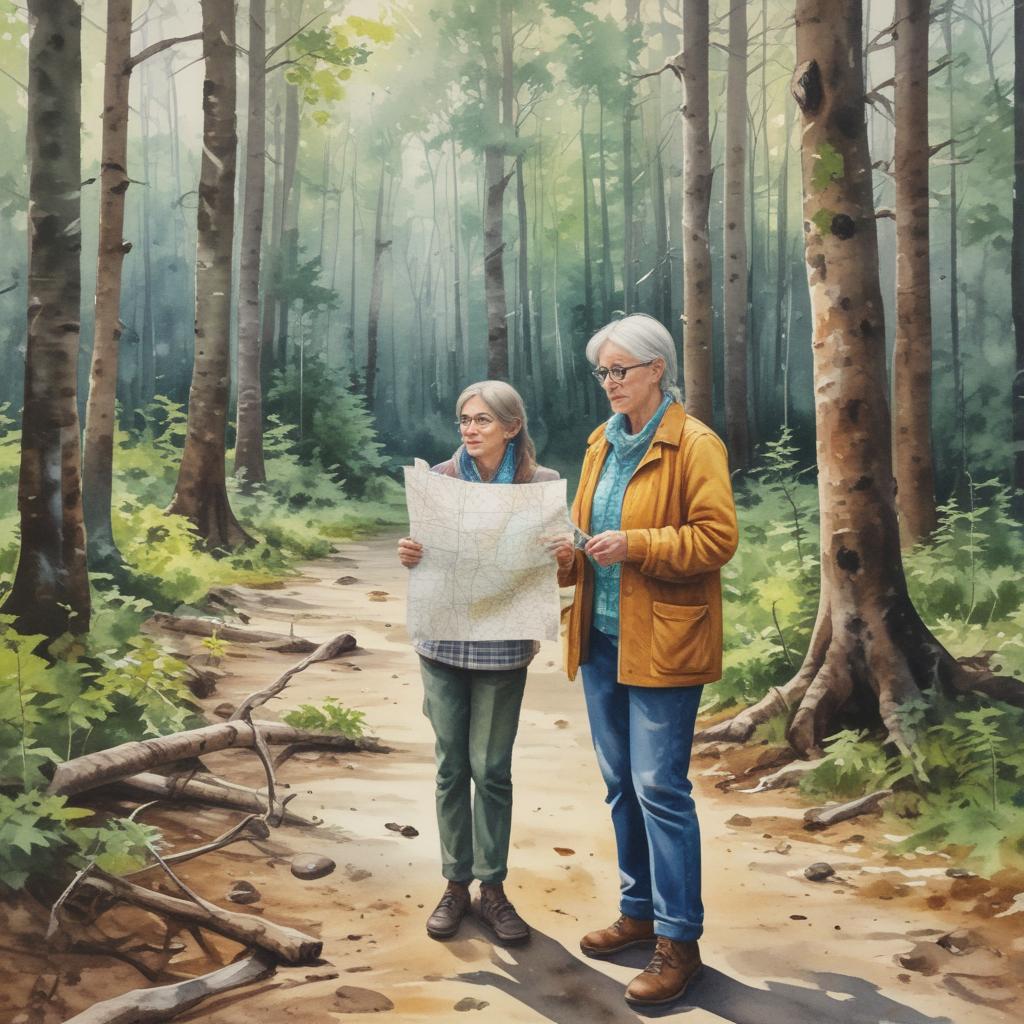
Consider a simple analogy: you can try to navigate a dense, unfamiliar forest by yourself. You may eventually find your way out, but it will be a slow, arduous process filled with wrong turns, wasted energy, and potential danger. Or, you can hire an experienced tracker who knows the trails, understands the terrain, and has a proven track record of guiding others to safety.
A guide provides accountability, which is essential when motivation is low. They help you stay on track, celebrate your small wins, and gently push you when you feel like giving up. A guide also provides a fresh perspective, seeing the patterns and blind spots that you, being so close to the problem, simply cannot.
The journey from burnout to a new purpose is a journey of transformation. It is not about getting back to who you were; it is about becoming someone new, someone stronger, and someone more aligned with your authentic self. While you can certainly attempt to make this journey on your own, a knowledgeable guide and an experienced mentor will provide the wisdom, the tools, and the unwavering support you need to make the journey safer, faster, and far more rewarding. They are not giving you the answers; they are helping you find the right questions, and ultimately, the right path.
Stephen B. Henry,
Instructor • Guide • Mentor
Subscribe to get the latest posts sent to your email.